
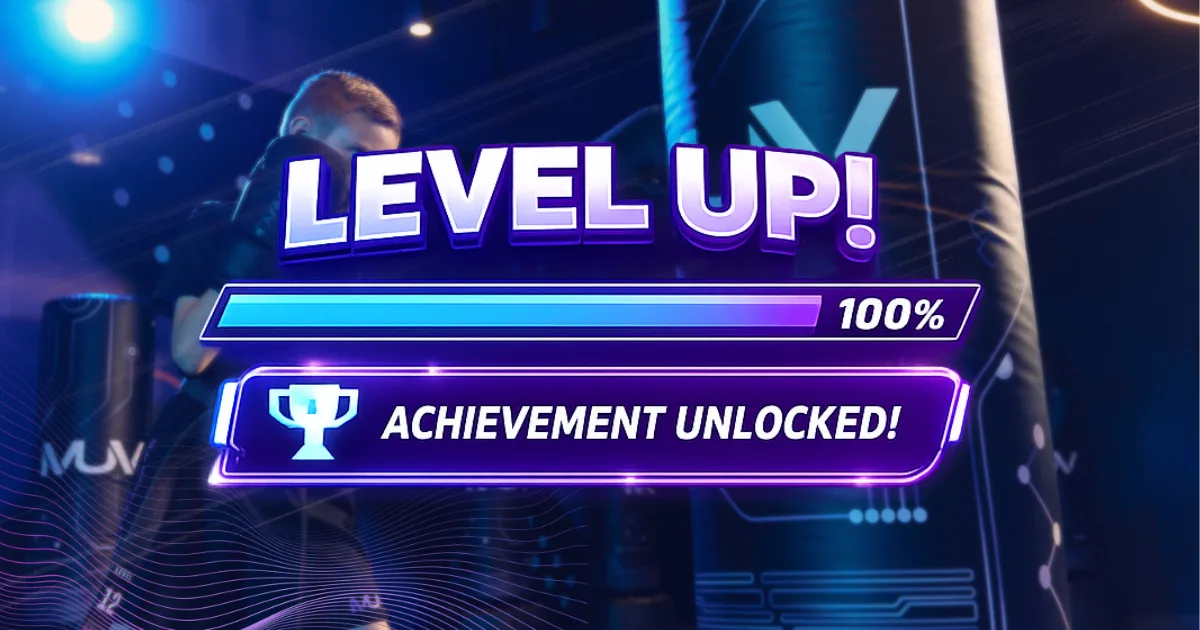
Why MUV Martial Arts Uses Video Game Psychology to Build Confident Kids
Your Kid Won't Put the Controller Down. So We Picked It Up.
Here's something most martial arts schools will never admit.
They're losing to video games.
Not because video games are better. Because video games understand something that traditional programs don't: the psychology of motivation. They know exactly how to keep a kid locked in, hungry for the next level, and coming back every single time.
At MUV, we didn't fight that. We studied it. And then we built a training system around it.
Because here's what we know after working with thousands of kids: the same brain that gets hooked on leveling up in Fortnite can get just as hooked on leveling up in real life. You just have to speak the right language.
That's exactly what we do.
The Psychology Behind Why Kids Can't Stop Playing Video Games
Before we talk about what MUV does, let's talk about why video games work. Because understanding this changes everything about how you think about motivation.
Video games are engineered around three core psychological principles:
Clear progression. The player always knows where they are, what they've earned, and exactly what they need to do next. There's no guessing. No ambiguity. Just a defined path forward.
Immediate feedback. Every action produces a visible result. Hit an enemy, see damage. Level up, hear the sound, see the animation. The brain gets rewarded in real time, which releases dopamine and reinforces the behavior.
Earned achievement. The best games don't hand you anything. You grind, you fail, you try again, and then you finally unlock the thing you've been working toward. That earned win hits completely different than something given to you for free.
Here's what most parents don't understand: your kid isn't addicted to the screen. They're addicted to the feeling of visible progress. The screen is just where that feeling has been living.
What if we gave them that same feeling in real life? On the mat. In their character. In who they're becoming?
That's the entire premise of MUV.
How MUV Gamifies Martial Arts Without Cheapening It
We want to be clear about something. We didn't water down martial arts to make it feel like a game. We took the psychology of games and used it to make real martial arts training more accessible, more motivating, and more effective for modern kids.
Here's how the system works:
- Belts = Levels. Each belt represents a measurable jump in skill, mindset, and character. Kids don't just move up because time passed. They move up because they've earned it.
- Stripes = Achievements. These are the mini-wins along the way — the checkpoints that tell an athlete "you're making progress, keep going." In a video game, this is the XP bar filling up. At MUV, it's a visible, tangible marker of real growth.
- Progress = XP. Experience points aren't just earned on the mat. They're earned through effort, consistency, and strong character. Show up ready to work? XP. Help a teammate? XP. Complete a MUV Mission at home? XP.
- Training Sessions = Missions. Every class at MUV is a mission. Not a practice. Not a session. A mission. Kids show up differently when they know they're on a mission.
- Checkpoints = Progress Reviews. Just like a video game saves your progress at key moments, MUV uses checkpoints to track where each athlete is in their journey.
- Level Up Parties = Graduation Ceremonies. Forget the stiff, formal belt ceremony. At MUV, earning a new level is a celebration. Families come. Energy is high. The whole community shows up.
- Sidequest Stickers = Bonus Missions. Awarded for specific character wins: helping a teammate without being asked, showing up with unshakeable focus, demonstrating gratitude in a hard moment.
The Belt Levels at MUV (And What Each One Actually Means)
The belt system at MUV isn't cosmetic. Each level is a genuine milestone in physical skill, mental toughness, and character development.
- 🎮 Pixel Fighter (White Belt) — Level 1. The starting point. Learning the language of the mat and building baseline discipline.
- 🔥 Magma Fighter (Orange Belt) — Levels 2–3. Energy is building. Foundational techniques are taking shape.
- ⚡ Neon Fighter (Yellow Belt) — Level 4. Confidence begins to show up outside the training center.
- 🌀 Portal Fighter (Green Belt) — Levels 5–6. Athletes understand the work required and have chosen to embrace it.
- ⭐ Star Fighter (Teal Belt) — Levels 7–8. Character development is locked in. These athletes lead by example.
- 💎 Pixel Fighter (Light Blue Belt) — Level 9. Technical precision is sharpening. Mental toughness is evident.
- ⚡ Lightning Fighter (Dark Blue Belt) — Level 10. Your child is now a leader. Younger athletes look to them.
- 🔮 Laser Fighter (Purple Belt) — Level 11. Advanced technique. Advanced mindset.
- 🌌 Galaxy Fighter (Dark Purple Belt) — Level 12. Composure. Consistency. Silent confidence becomes undeniable.
- ☁️ Cloud Fighter (Red Belt) — Level 13. The home stretch. Everything is being refined and tested.
- 🎖 Camo Fighter (Grey Belt) — Level 14. Pre-Black Belt. The final checkpoint.
- 🏆 Boss Fighter (Black Belt with Gold Stripe). The final boss. Not the end of the journey — the beginning of who they are for the rest of their life.
Every single level is earned. Every single level means something. And every single level is celebrated like the win it is.
Why This Works (The Science Behind the System)
This isn't just a cool concept. The psychology behind gamification in child development is backed by research in behavioral science and neurodevelopment.
When a child earns a visible reward tied to genuine effort, dopamine is released. The brain codes that behavior as "worth repeating." Over time, the behavior becomes identity. The kid who earns stripes for showing up focused starts showing up focused because that's who they are. Not because of the stripe.
That's the real goal. The XP, the levels, the achievements are not the destination. They're the vehicle. They create the repetition of positive behaviors long enough for those behaviors to become character.
Kids don't need to be protected from challenge. They need challenge wrapped in a system that makes the path forward clear, the progress visible, and the wins worth celebrating.
That's exactly what MUV built.
"Be the Character You'd Pick in a Game."
That's something we challenge every MUV athlete to think about.
If you were picking a character to play in a game, who would you choose? The one who quits when it gets hard? The one who blames the controller when they lose? Or the one who's strong, composed, clutch under pressure, and always finds a way to level up?
We challenge kids to be that character. In training. At school. At home. In life.
Because at MUV, the mat is just the training ground. The real game is who your child becomes.
Ready to Let Your Kid Level Up for Real?
If your child loves video games, there's nothing wrong with them. Their brain is wired to respond to challenge, progress, and earned achievement. That's actually a strength.
We built a system designed specifically to channel that wiring into real-world confidence, discipline, and character.
🔥 Try MUV for 21 Days, Just $21.
Here's what your athlete gets:
- ✅ 21 full days of training
- ✅ FREE MUV T-Shirt (because every champion needs a jersey)
- ✅ FREE Parents Night Out Event (you get a night out, they get an experience they'll talk about for weeks)
📍 MUV Martial Arts, Chandler, AZ
2815 S Alma School Rd, Suite A12, Chandler, AZ 85248
🌐 www.muvmartialarts.com
📞 (480) 219-7513
Stop fighting the controller. Join the MUVment. 💜