
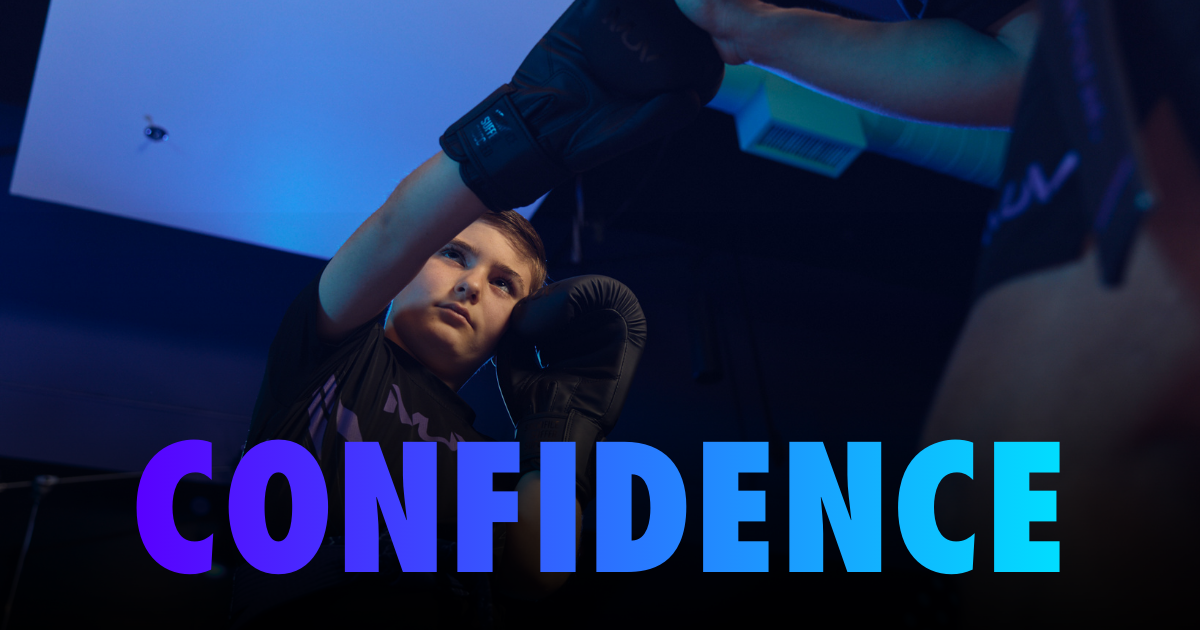
Why Martial Arts Builds Confidence in Kids
Every parent wants their child to be confident — but real confidence isn't something you can just tell a kid to have. It has to be earned through experience.
That's exactly what martial arts provides. Unlike team sports where a child can hide on the bench, martial arts puts every athlete front and center. They must face challenges individually, push through discomfort, and earn every single belt rank.
Here in Chandler and Gilbert, we meet a lot of parents who describe the same child: bright, kind, capable at home — and then quiet, hesitant, or anxious the moment they step into a new classroom, a birthday party, or a tryout. That gap between who a child is at home and who they are in the world is exactly what martial arts training is built to close.
Why Telling Kids They're Confident Doesn't Work
Most of us grew up hearing that confidence comes from encouragement. And encouragement matters. But kids are smart. They know the difference between being told they're great and actually proving something to themselves.
Praise that isn't connected to real effort fades quickly. A trophy for showing up doesn't change how a child walks into a room. What does change it is evidence — a memory of doing something hard, struggling, and coming out the other side. Confidence is really just a child's internal record of what they've already overcome.
Martial arts gives kids a steady stream of that evidence, class after class, week after week.
Think about the first time your child rode a bike without training wheels. Nobody had to convince them they could do it afterward. They knew, because they had felt themselves wobble, fall, get back on, and finally ride. Martial arts recreates that feeling on purpose, over and over, in a structured setting with coaches who know how to guide each child through the wobble. Every new skill becomes another bike ride, and another piece of proof.
The Confidence Cycle
Here's how it works:
- Challenge: An athlete is given a new technique or form to learn
- Struggle: They practice, fail, and try again
- Achievement: They master the skill and earn recognition
- Confidence: They internalize "I can do hard things"
This cycle repeats hundreds of times throughout a child's martial arts journey, building a deep reservoir of self-belief that transfers to school, friendships, and life.
The key is that the challenges are sized correctly. Too easy, and nothing is earned. Too hard, and a child shuts down. A good martial arts program constantly adjusts the difficulty so every athlete is working right at the edge of what they can do. That edge is where confidence is built.
Five Ways Martial Arts Builds Real Confidence
1. Clear, visible goals
Belt ranks give kids something concrete to work toward. A child knows exactly what skills they need for the next stripe or belt, and they can see their own progress. For many kids, it's the first time they've set a goal, worked for months, and achieved it on their own.
2. Safe practice with failure
On the mat, missing a kick or forgetting a form isn't a disaster. It's just part of class. Kids learn to fail in front of others, reset, and try again — the exact skill that makes school presentations, tests, and sports tryouts less scary.
3. Body confidence
Confidence lives in the body as much as the mind. As kids get stronger, faster, and more coordinated, they start to stand taller and move with purpose. Parents often notice the posture change before anything else.
4. Speaking up
In every MUV class, athletes answer coaches with a loud, clear voice, make eye contact, and sometimes lead warm-ups for their teammates. For shy kids, these small reps of speaking up add up fast.
5. Belonging
Kids feel braver when they're part of a team that has their back. Martial arts classes are a community where older athletes help newer ones, and everyone is working on the same thing. That sense of belonging gives a child a stable base to grow from.
What Parents Notice
Parents at MUV consistently report changes within the first few weeks:
- Better eye contact with adults
- Speaking up in class at school
- Standing up to peer pressure
- Trying new things without fear of failure
Over the following months, those early changes tend to deepen. Kids who used to hang back at the park start joining games. Kids who melted down over homework start pushing through frustration. Kids who were nervous about new situations start walking in first.
Confidence vs. Aggression: A Common Worry
Some parents worry that martial arts will make their child more aggressive. In practice, the opposite usually happens. Kids who know they can handle themselves don't feel the need to prove it. Real confidence is calm. It shows up as self-control, not showing off.
At MUV, every class reinforces respect, discipline, and when not to use what you've learned. Self-defense is taught as a last resort, and walking away is treated as a strength.
What This Looks Like for Chandler and Gilbert Families
East Valley kids are busy. Between school, homework, other sports, and screens, it can be hard to find an activity that actually moves the needle on character. Many of the families who train with us in Chandler come from nearby neighborhoods like Ocotillo, Sun Lakes, and West Chandler, and a growing number drive over from Gilbert communities like Val Vista Lakes, Power Ranch, and Seville.
What they tell us is consistent: they wanted something more than a workout. They wanted their child to come home a little stronger, a little calmer, and a little more sure of themselves every week. Our studio at 2815 S Alma School Rd in Chandler is an easy drive from the Loop 202 and Loop 101, which makes after-school classes realistic even on busy weeknights.
Choosing the Right Program for Your Child's Age
Confidence looks different at different ages, so our programs are built around how kids actually develop:
- Mighty MUVers (ages 4–7): Listening, focus, body control, and the first experiences of earning something on their own.
- MUV Prime (ages 8–12): Skill, conditioning, and the character to handle peer pressure, setbacks, and bigger goals.
- MUV Warriors (ages 13+): Mental toughness, leadership, and real fitness for teens and adults.
How to Help Confidence Grow at Home
Training works best when home reinforces it. A few simple habits make a big difference:
- Praise effort, not talent. "You kept practicing that kick" lands deeper than "You're so good at this."
- Let them struggle a little. Resist jumping in at the first sign of frustration. Give them a chance to work it out.
- Ask about class. Have your child teach you a move or explain what they learned. Teaching builds mastery and pride.
- Celebrate milestones. Belt tests and stripes are big deals. Treat them that way.
The Bottom Line
If your child struggles with shyness, self-doubt, or hesitation, martial arts may be the missing piece. It's not about fighting — it's about building an unshakable belief in themselves, one earned win at a time.
The easiest way to see if it's a fit is to try it. Our 21-Day Trial for $21 lets your child train for three weeks, so you can watch the confidence cycle start for yourself. Families from Chandler, Gilbert, and across the East Valley are welcome — come see what your child is capable of.